
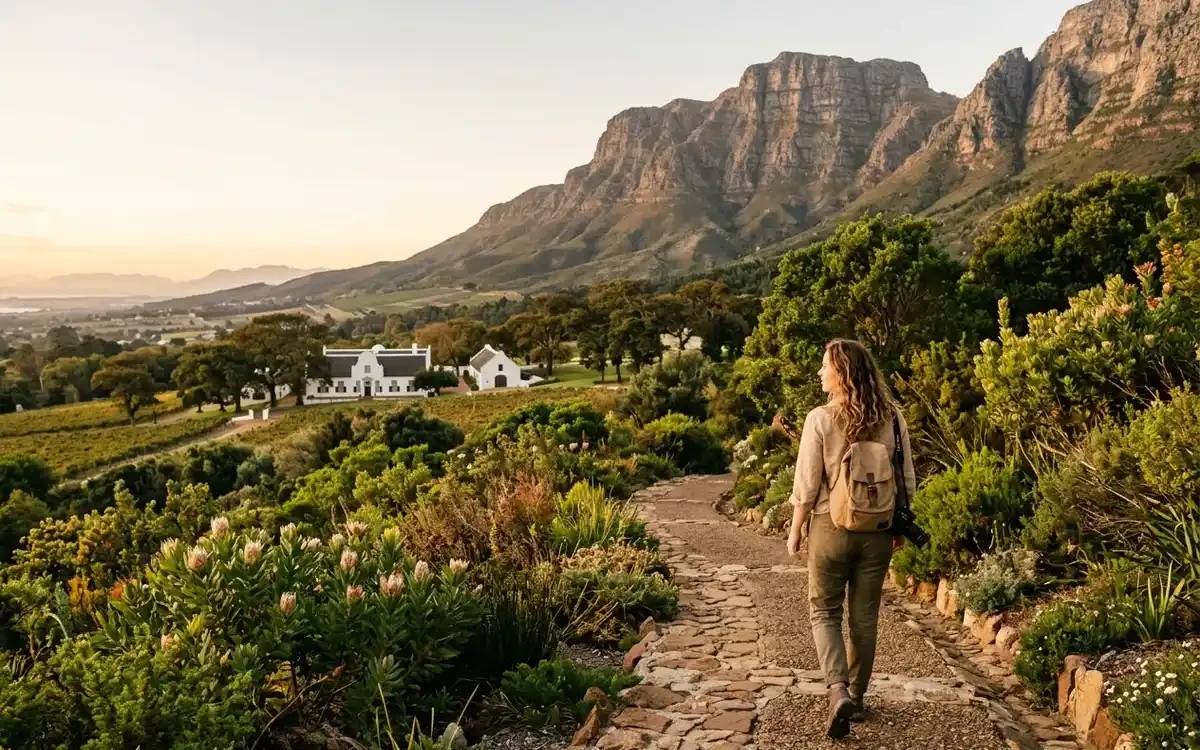
Both Kirstenbosch National Botanical Garden and Groot Constantia Wine Estate sit in the Constantia Valley — within a few kilometres of each other, sharing the same mountain backdrop and the same afternoon light. They're both genuinely excellent and genuinely different. Here's how to decide which one belongs on your day.
The Case for Kirstenbosch
Kirstenbosch is one of the great botanical gardens of the world and Cape Town's most underrated cultural asset. The garden sits against the eastern face of Table Mountain, covering 528 hectares from manicured lower terraces to wild fynbos and the indigenous forest of Skeleton Gorge above. What makes it exceptional isn't just the plants — it's the setting. The mountain is always present, close enough to feel like a wall, and the contrast of the cultivated garden against that wild backdrop is one of the more unusual experiences in the city.
The Boomslang, an aerial walkway that curves through the tree canopy, is genuinely worth it — adults and children both respond to the perspective it offers. The cycad amphitheatre, the fern garden, and the collection of Cape flora rare elsewhere in the world are all here. The restaurant on site is decent, the café is good for lunch, and the garden itself is large enough that you can spend three to four hours without covering it fully.
The Sunday afternoon concerts (September through April) are a Cape Town institution. The lineup runs from classical to jazz to local pop acts, and the format — blanket on the grass, food from vendors, mountain behind the stage — is the kind of thing that makes people fall in love with the city. Book tickets online; the popular acts sell out weeks in advance.
Go to Kirstenbosch if: you want a proper half-day out in a world-class setting, you're interested in South African flora, you have children with you, or there's a concert you want to attend.
The Case for Groot Constantia
Groot Constantia is South Africa's oldest wine estate, established in 1685, and it looks the part. The Cape Dutch manor house at its centre is one of the finest examples of the architectural style in the country, and the estate is beautifully maintained with oak-lined avenues, vine-covered hills, and views toward the mountains on every side. If you arrived without knowing anything about it, you would assume it had been here forever — which, by South African wine standards, it has.
The wine tasting rooms are open daily and the estate produces a range of well-regarded varietals, particularly the Gouverneurs Reserve red blend and the Sauvignon Blanc. The cellar tour gives context to the winemaking process and the estate's history, which runs through some of the more interesting episodes in early Cape colonial life. Two restaurants on the estate — Jonkershuis and Simon's — both do good food at a reasonable pace for a wine estate lunch.
Groot Constantia is more relaxed than Kirstenbosch and more specifically about wine, history, and the pleasure of being somewhere beautiful for a long afternoon. It's the better choice if you're in a small group, you want to taste wine properly, or you're looking for a slow Sunday afternoon that ends naturally with a bottle and an outdoor table.
Go to Groot Constantia if: you want to taste wine in a historic setting, you'd like a relaxed lunch with a view, or you're interested in Cape Dutch architecture and early colonial history.
Or Do Both
They're six kilometres apart. Kirstenbosch opens at 8am, which means you can do a morning visit, walk the Boomslang, have an early lunch at the café, and be at Groot Constantia for a wine tasting by 2pm. It's a full but unhurried day, and the Constantia Valley in the afternoon light is one of the better arguments for living in Cape Town. Drive back via the Constantia Nek pass for the view.