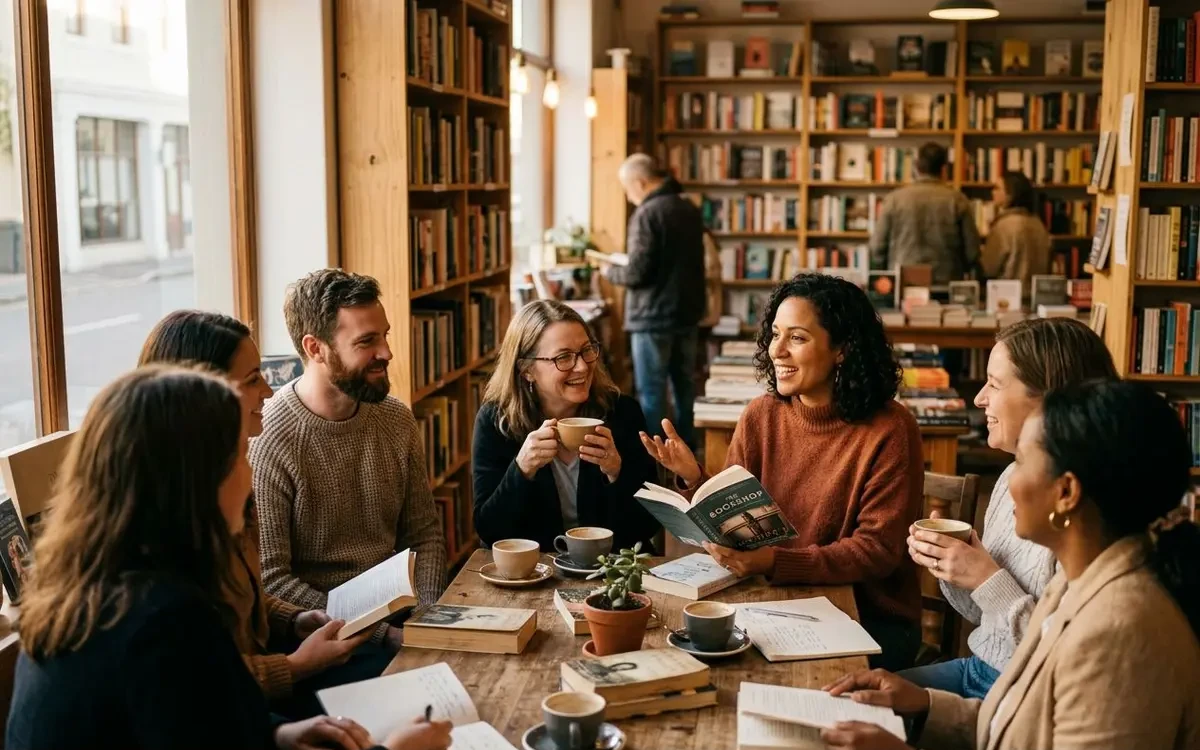
Cape Town has a genuinely strong reading culture. The Book Lounge, the Open Book Festival, and a network of neighbourhood book clubs that have been running for decades are all evidence of a city that takes literature seriously — not as an affectation, but as a real part of how people here spend their time. If you are new to the city and looking for a community built around books, here is where to start.
The Book Lounge
The Book Lounge on Roeland Street in the City Bowl is the obvious anchor of Cape Town's literary community. The events programme runs throughout the year — author readings, panel discussions, book launches, and the occasional literary debate — and the shop's curation is among the best in the country for South African fiction, poetry, and narrative non-fiction. The events are usually free or very low cost, and they reliably attract an interesting cross-section of Cape Town's reading community. Following their events calendar on social media or signing up to their newsletter is the single best way to stay connected to what is happening in Cape Town's literary world.
The Open Book Festival
The Open Book Festival takes place each October across several venues in Cape Town — the City Hall, the Book Lounge, and partner spaces — and runs for three or four days. It is the major annual literary event on the Cape Town calendar. The programming covers South African and international literary fiction, crime, non-fiction, children's literature, and poetry. Unlike some festivals that skew toward celebrity memoir, Open Book tends to prioritise literary quality in its selection. Tickets are relatively affordable; a day pass gives access to all panels and readings across the venues. Worth planning a visit around if you are a serious reader.
Finding Neighbourhood Book Clubs
Cape Town's suburb-level book clubs are largely invisible unless you know where to look. Most of them operate through word of mouth, church networks, or neighbourhood Facebook groups rather than formal listings. The most reliable routes in:
Neighbourhood Facebook groups. Most Cape Town suburbs have a Facebook group (Sea Point Community, Observatory Neighbourhood, and similar) and these regularly carry posts from book clubs looking for new members. Searching "book club" within your suburb's group is usually productive.
The Book Lounge noticeboard. The shop has a physical noticeboard and the staff are aware of many of the groups in the city. Asking at the counter is not a bad approach if you are looking for something specific — a particular genre, a particular part of the city, a particular meeting frequency.
Goodreads Cape Town groups. The Goodreads platform has several Cape Town-based reading groups that meet in person. Activity levels vary; some have moved fully online, others are active and welcoming of new members.
Genre-Specific Communities
If you read primarily in a particular genre, Cape Town has communities for that too. Crime fiction has a notably active local community — South African crime writing is a serious literary genre with internationally recognised authors, and there are readers and groups specifically focused on it. Literary fiction clubs that focus on translated fiction, on African literature, and on women's writing all exist; finding them requires some searching through the channels above but they are there.
Starting Your Own
The honest advice if you cannot find something that fits: starting a book club in Cape Town is easier than in most cities because the social pace here supports longer, more consistent commitments. Most Cape Town book clubs meet monthly, which is the right frequency for people with busy lives to actually read the book and have something to say about it. Four to eight people is the right size — small enough that everyone contributes, large enough to absorb the occasional absence. The Book Lounge will host a launch event for a new club if you ask; it is a useful way to find your initial members.