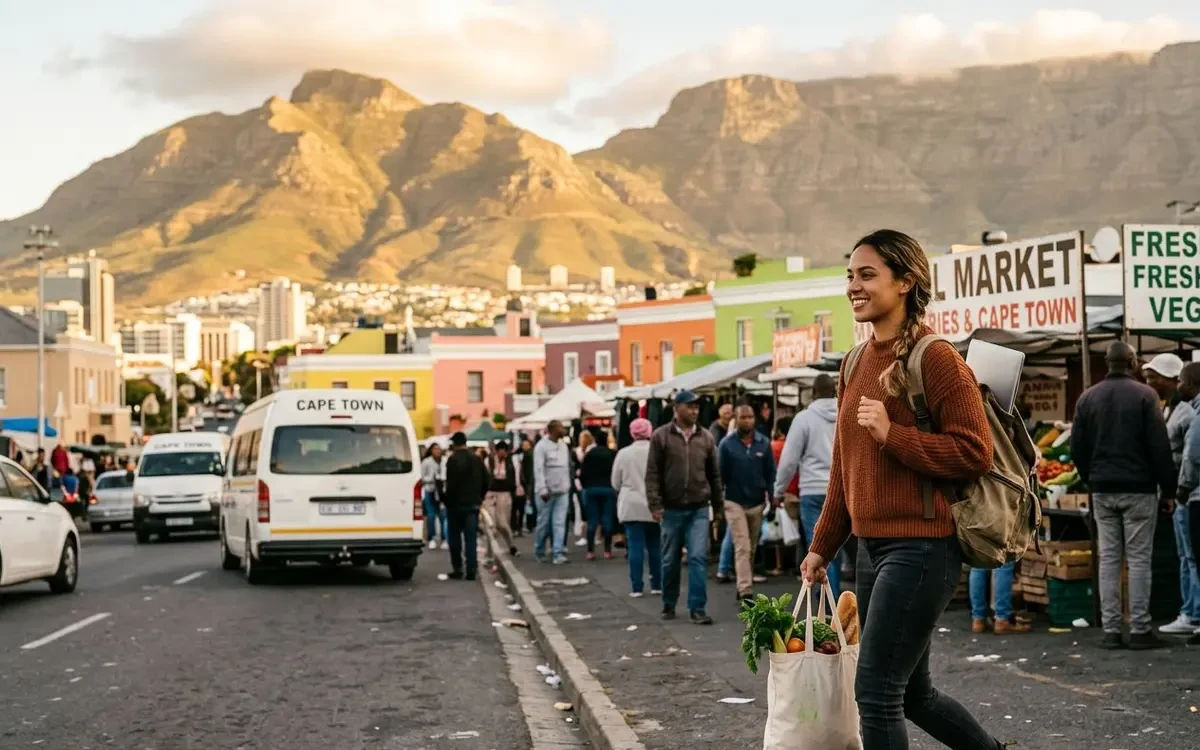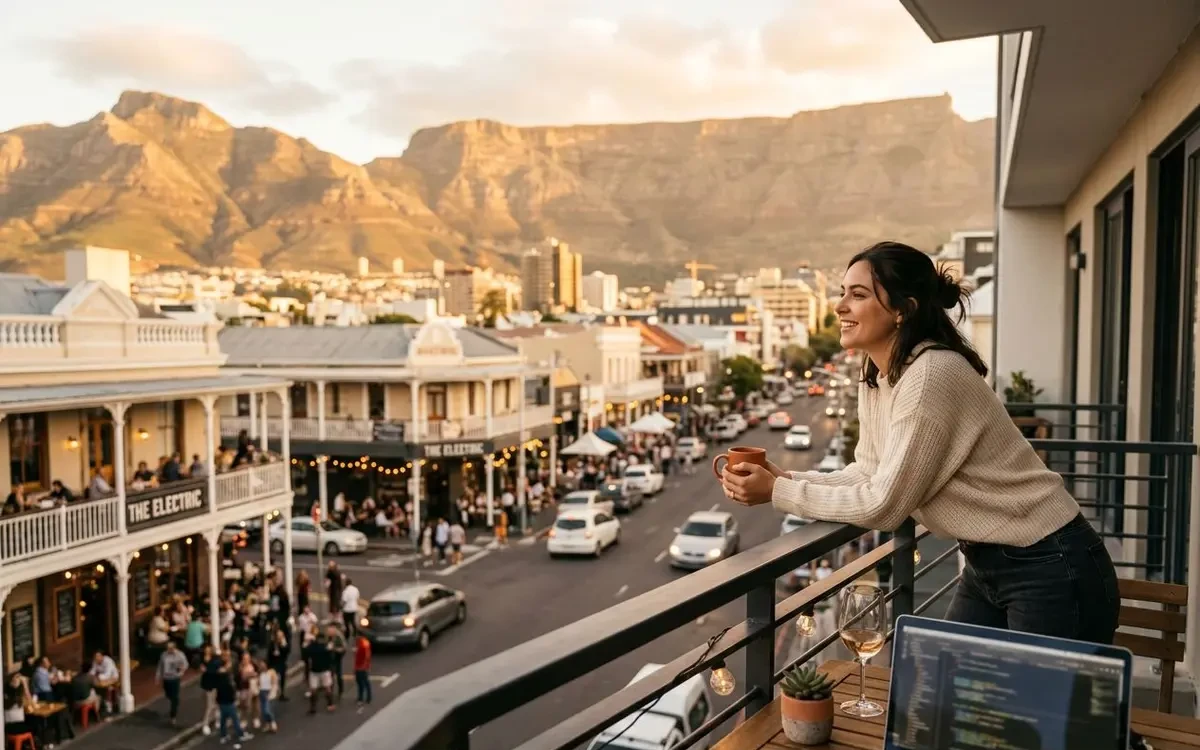
Cape Town's creative scene does not announce itself the way some cities' do. There are no enormous cultural districts or government-funded art campuses dominating the landscape. What exists instead is something more interesting: a distributed network of galleries, studios, design practices, and cultural institutions that have grown organically from the city's particular geography and history. Here is where to find it.
Woodstock: The Creative Heartland
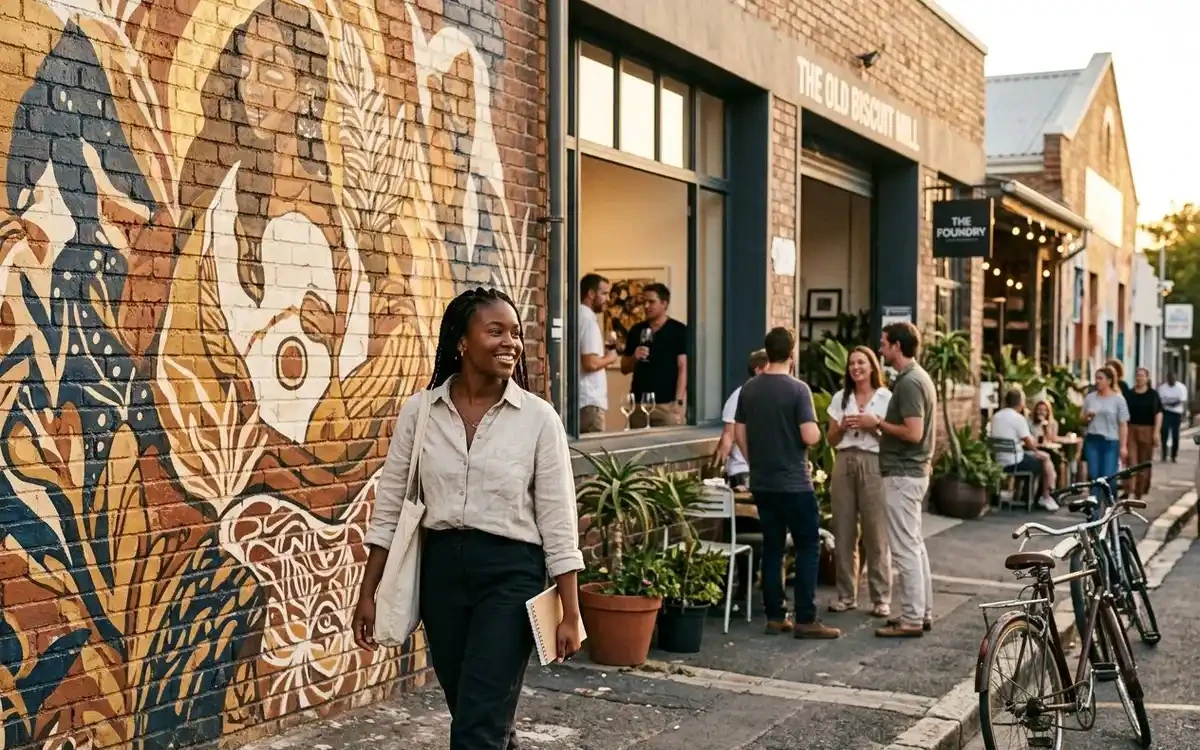
Woodstock has been the centre of gravity for Cape Town's creative economy for over a decade. The suburb's industrial buildings — warehouses, former factories, converted workshops — provide the kind of large, affordable space that artists and makers need and that the Atlantic Seaboard stopped providing years ago. The Woodstock Exchange on Albert Road is home to an eclectic mix of design studios, fashion labels, and food businesses. The Old Biscuit Mill, also in Woodstock, houses some of the city's better creative businesses alongside the Neighbourgoods Market that made it famous.
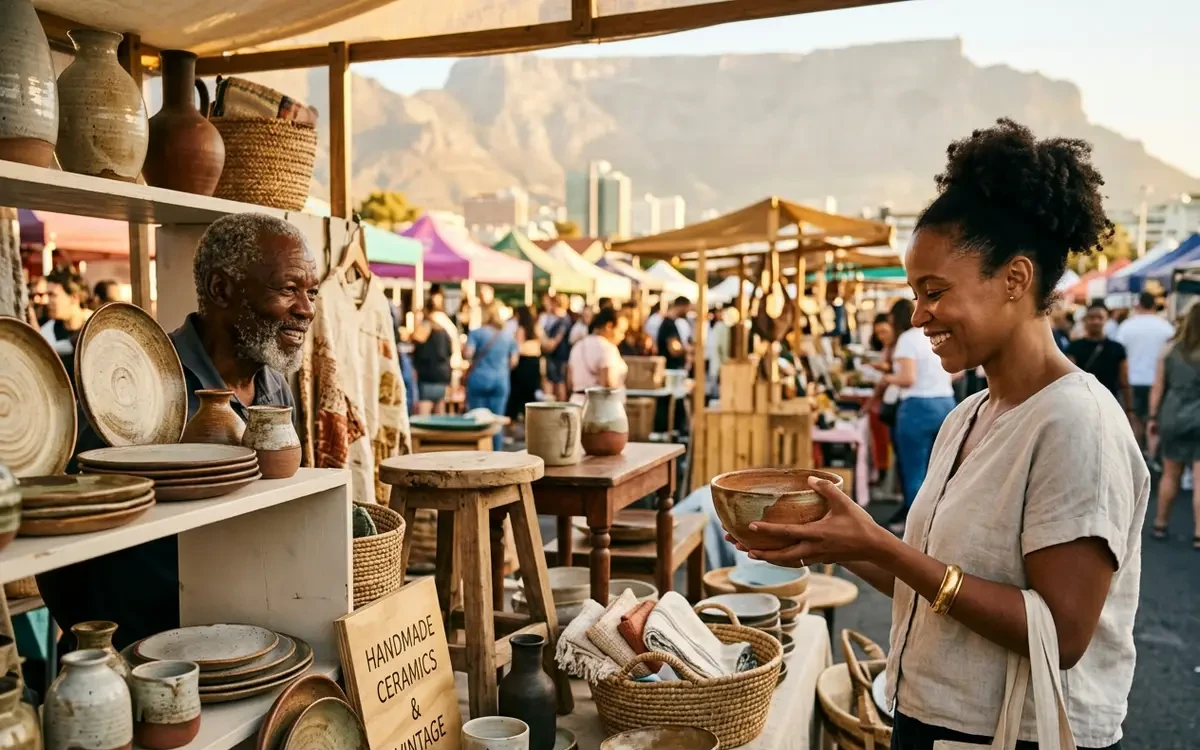
Walk along Albert Road on a weekday and you will encounter ceramics studios, furniture makers, graphic designers, photographers, and architects all working within a few hundred metres of each other. The informal cross-pollination this creates is part of what gives the neighbourhood its particular energy. It is one of the few places in Cape Town where you genuinely stumble across interesting work rather than having to seek it out.
The Gallery Landscape
Whatiftheworld in the city centre is the most internationally connected of Cape Town's commercial galleries, regularly placing artists in major fairs and institutional collections. The programming tends toward conceptually rigorous work and the gallery has been consistent in developing young South African artists over the long term. The space on Buiten Street is clean and well-lit; worth checking their exhibition schedule before you visit.
Everard Read on Portswood Road in the V&A Waterfront precinct represents more established names and tends toward work that sells predictably — landscapes, figurative painting, sculpture. It is the kind of gallery where you are more likely to recognise the aesthetic even if you do not know the artists. Not cutting-edge, but a reliable introduction to a certain strand of South African painting tradition.
SMAC Gallery in Stellenbosch (a 45-minute drive) is worth mentioning even in a Cape Town context because its stable of artists overlaps significantly with the city's scene and its Stellenbosch space is notably better than most of the Cape Town alternatives. Easy to combine with a wine farm visit.
Film, Fashion, and Design
Cape Town has become one of Africa's leading film production locations, partly because of the diversity of landscapes, partly because of a strong technical crew base built up over decades of international productions using the city. The local film industry supports a significant ecosystem of stylists, set designers, prop makers, and costume designers who are visible in the city if you know where to look. The Cape Town International Convention Centre hosts regular design and film industry events.
The fashion scene is smaller but genuine. Locally designed and locally made clothing can be found at the Neighbourgoods Market and at a handful of shops in the City Bowl. Merchants on Long is probably the most reliable curation of local fashion designers in a single retail space. The quality varies, but the commitment to local production is consistent.
Books and Literary Culture
The Book Lounge on Roeland Street is one of the better independent bookshops in the country and functions as a cultural hub beyond its retail role. The events programme brings local and international authors through regularly; the curation is notably stronger than most bookshops for South African fiction, poetry, and local history. It is the kind of bookshop you spend an hour in when you planned to spend ten minutes.
The Open Book Festival in October is the main literary calendar event — three days of panels, readings, and conversations at venues around the city centre. It has a genuine literary quality rather than the celebrity-memoir-focused programming of larger festivals.
How to Find What You're Looking For
The Cape Town creative scene is not concentrated enough to explore in an afternoon. The better approach is to focus on one area — start with the Woodstock corridor on a Saturday morning, when studios are sometimes open and the Neighbourgoods Market provides an anchor — and let the rest emerge from there. Following local galleries and studios on Instagram gives a more accurate picture of what is actually happening than any single guide, because the scene moves and what is interesting shifts from season to season.