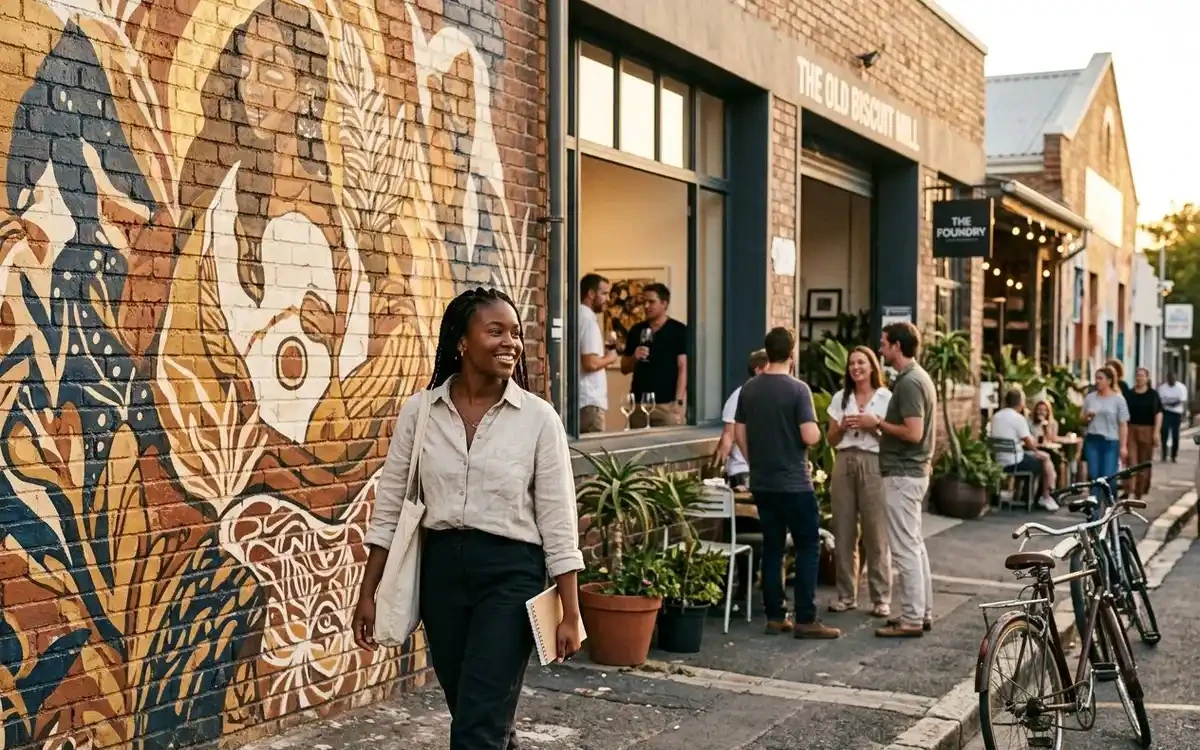

Cape Town has a deep maker culture — ceramicists, weavers, furniture builders, potters, textile designers — and the city's markets and independent shops give you direct access to work that you genuinely cannot find anywhere else. This is where to look if you are furnishing a home here or looking for something with a real story behind it.
The Homemakers Expo
The Homemakers Expo runs twice a year at the Cape Town International Convention Centre — typically in March and September — and is the most concentrated single source of local home décor, furniture, and design in the region. It covers everything from high-end bespoke cabinetry to handwoven cushions to architectural hardware. The quality range is wide, so going in with a specific brief helps: decide whether you are looking for textiles, furniture, ceramics, or lighting before you arrive or you will be overwhelmed and leave with nothing in particular. Entry is ticketed. Worth it if you are setting up or renovating.
The Old Biscuit Mill Market
The Neighbourgoods Market at the Old Biscuit Mill in Woodstock is primarily a food market, but the surrounding tenants — accessible through the week — include some of the better local design and homeware studios in the city. The Biscuit Mill complex houses a rotation of ceramicists, textile makers, and furniture designers who sell directly from their studios on weekdays. The advantage over a market is that you can actually talk to the person who made the thing you are buying, and many will take commissions.
African Image and Tribal Trend
Both shops are on Church Street in the City Bowl and both carry genuinely African craft and textile work — not the tourist-shop version, but pieces sourced from craft producers across the continent. African Image has been in the same location for decades and the curation is notably considered. Tribal Trend overlaps in some areas but has a stronger focus on textiles: rugs, wall hangings, throws. Neither is particularly cheap, but the provenance is real and the quality is consistent.
Local Ceramics Studios
Cape Town has an unusually strong ceramics scene for a city its size. Several studios in and around Woodstock sell directly to the public. Look for the Cape Craft and Design Institute's directory of registered craft producers if you want to find specific ceramicists — they map studio locations and open days across the Western Cape. Most studios are open by appointment rather than walk-in, so a quick Instagram message before visiting saves a wasted trip.
For a more accessible introduction, the Oranjezicht City Farm Market on Saturday mornings usually has two or three ceramics sellers among the food stalls. The scale is smaller — bowls, mugs, vases — but the prices are fair and you can see the range without committing to a studio visit.
For Art on the Walls
Both Whatiftheworld and SMAC Gallery (the latter in Stellenbosch, easily day-tripped) work with South African artists at multiple price points. Original work starts at a few thousand rand for works on paper by emerging artists; limited edition prints are available at most galleries for considerably less. Buying directly from a gallery rather than through an online aggregator means the money goes to the artist's gallery relationship, which matters for their long-term careers.
For affordable prints specifically, the Neighbourgoods Market often has independent illustrators and designers selling limited-run work. The quality and scale is appropriate for a bedroom or study wall rather than a living room centrepiece, but for the price point the quality is usually strong.