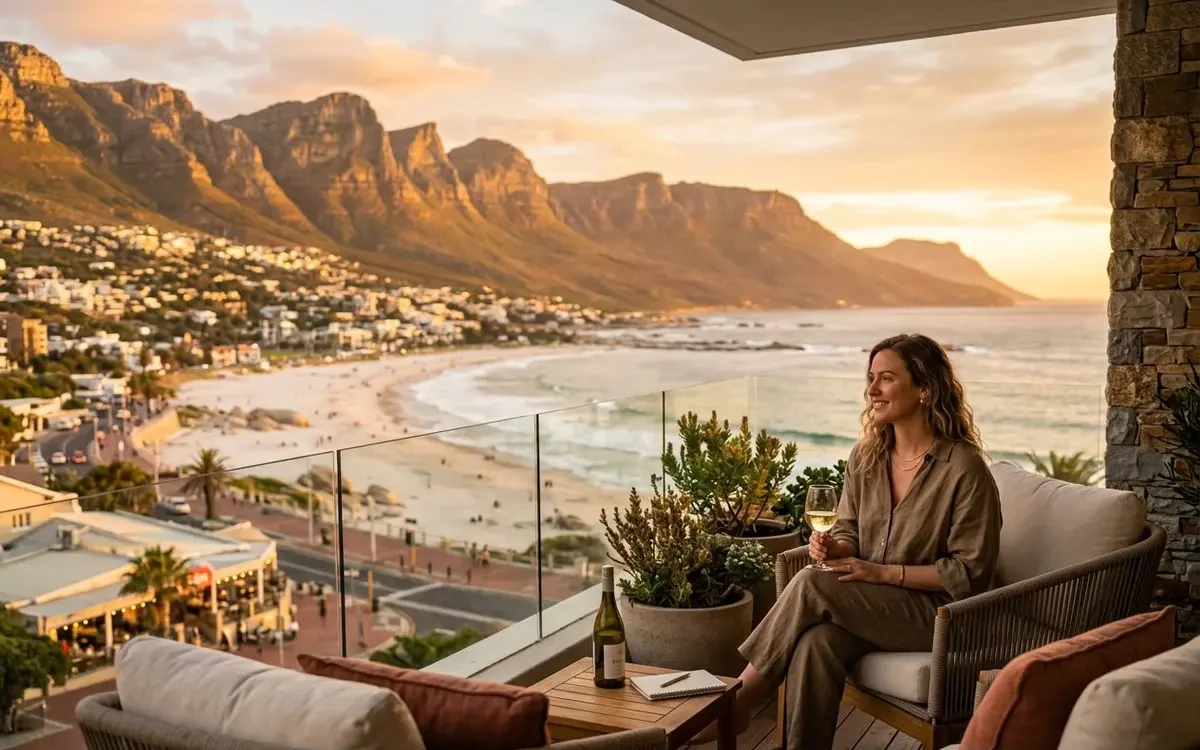
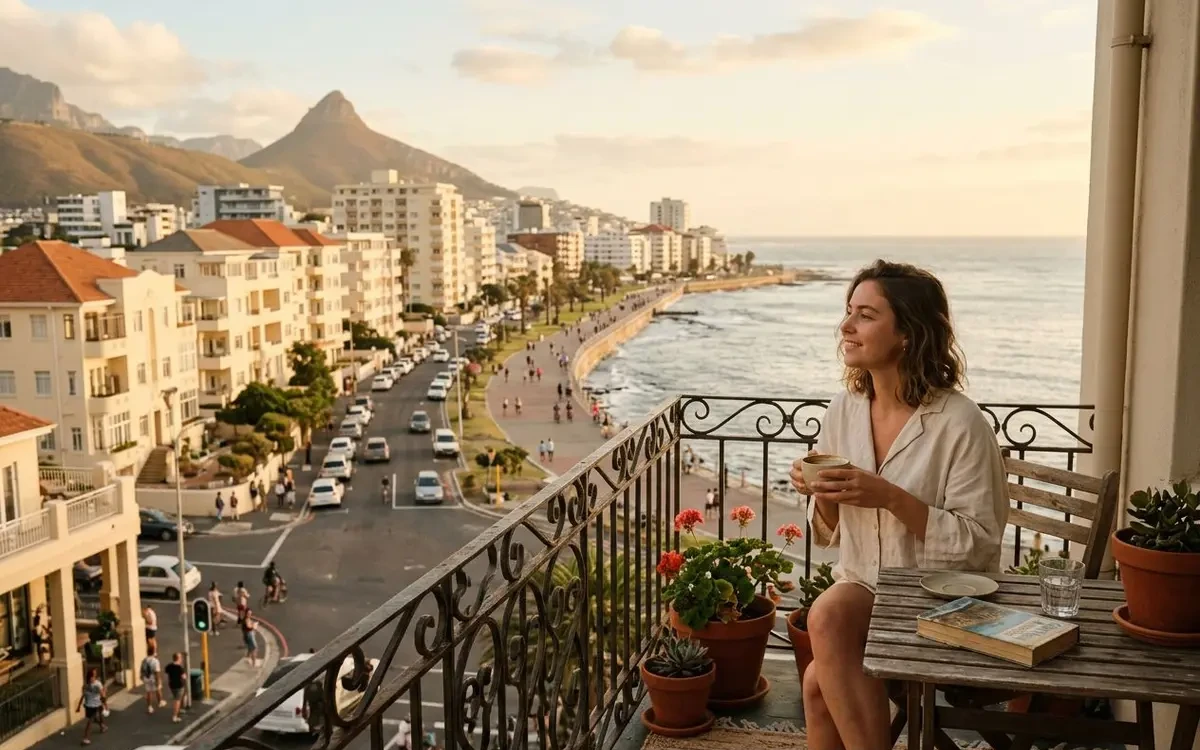
Sea Point and Green Point are often treated as interchangeable by visitors planning a Cape Town trip. They appear next to each other on a map, they share the Atlantic Seaboard promenade, and they are both an easy drive from the V&A Waterfront. But they feel noticeably different on the ground, they attract different types of traveller, and the accommodation options in each suburb are not at all the same. Here is an honest comparison.
The Geography
Green Point sits between the V&A Waterfront and Sea Point. It is the first Atlantic Seaboard suburb you reach when leaving the Waterfront heading south along the coast, and it is relatively compact — a mix of residential streets, some apartment hotels, and the large green space anchored by Green Point Park and Cape Town Stadium. Sea Point begins where Green Point ends and extends further along the coast toward Bantry Bay and eventually Camps Bay.
Both suburbs have access to the Sea Point promenade, one of the best urban walks in Cape Town — a wide, flat path along the Atlantic that runs for several kilometres and is busy at almost every hour of the day. Both are walkable. Neither requires a car to function day-to-day, though a car helps for longer excursions.
Sea Point: The Vibe
Sea Point is denser, more residential, and more genuinely mixed than Green Point. It has a large international community, a long-established Jewish neighbourhood, and a Main Road that contains one of the better collections of everyday restaurants on the Atlantic Seaboard. La Mouette, Sotano, and a rotating collection of newer openings sit alongside cafes, delis, and grocery stores that serve the people who actually live here. The promenade tidal pools are a distinctive local feature — families, serious swimmers, and morning walkers use them daily.
Sea Point is also slightly grittier than Green Point. The main road is busy and commercial in places, the apartment buildings are older, and the neighbourhood does not have the polished edges of the areas immediately beside the Waterfront. This is not a criticism — it is part of what makes Sea Point feel like a real neighbourhood rather than a visitor zone. But it is a genuine difference in character.
Green Point: The Vibe
Green Point is quieter and slightly more polished. The streets immediately off the main road are genuinely residential and calm. Green Point Park — a large, well-maintained urban park adjacent to Cape Town Stadium — gives the area a different kind of open space to Sea Point's promenade, and it is excellent for families with children. The Stadium itself hosts events periodically, which can make nearby streets noisy on event nights but also brings energy to an otherwise quiet suburb.
The Waterfront is a fifteen-minute walk from most of Green Point. This proximity is one of Green Point's clearest advantages over Sea Point, where the Waterfront is accessible but requires a bus, rideshare, or a longer walk. For guests whose plans include regular Waterfront visits — the ferry to Robben Island, the Two Oceans Aquarium, the restaurants, the markets — Green Point removes a daily logistical friction that Sea Point does not.
Accommodation: The Honest Comparison
Sea Point has significantly more accommodation options at more varied price points. Apartments for self-catering, small guesthouses, a handful of full hotels — the supply is broader, which means more flexibility and generally more competitive pricing. For longer stays in particular, the self-catering apartment options in Sea Point are among the best value on the Atlantic Seaboard.
Green Point has fewer options but a higher quality average at the properties that do exist. POD Boutique Hotel is the standout — well-designed, reasonably priced at R2,000–R3,500, and one of the better mid-range stays in the city. The Rockwell offers apartment-hotel accommodation at a high standard. Newer apartment hotels in Green Point tend to be more recently built and benefit from that in terms of facilities and design. The trade-off is that availability is tighter, especially in high season, and the range narrows quickly if your budget drops below the mid-range.
The Verdict
Families and guests planning a stay of more than four or five days will generally do better in Sea Point. The self-catering options are stronger, there is more to walk to on a daily basis, and the neighbourhood has the kind of everyday infrastructure — supermarkets, pharmacies, delis, pools — that makes a longer stay genuinely comfortable.
Short stays and guests whose priority is Waterfront access will be better served by Green Point. The proximity to the V&A is a real advantage for a two- or three-night trip, the accommodation quality at the top end is excellent, and the suburb feels contained in a way that makes navigation easy for first-time visitors. Both are excellent Atlantic Seaboard bases. The question is really about what your trip looks like day to day.