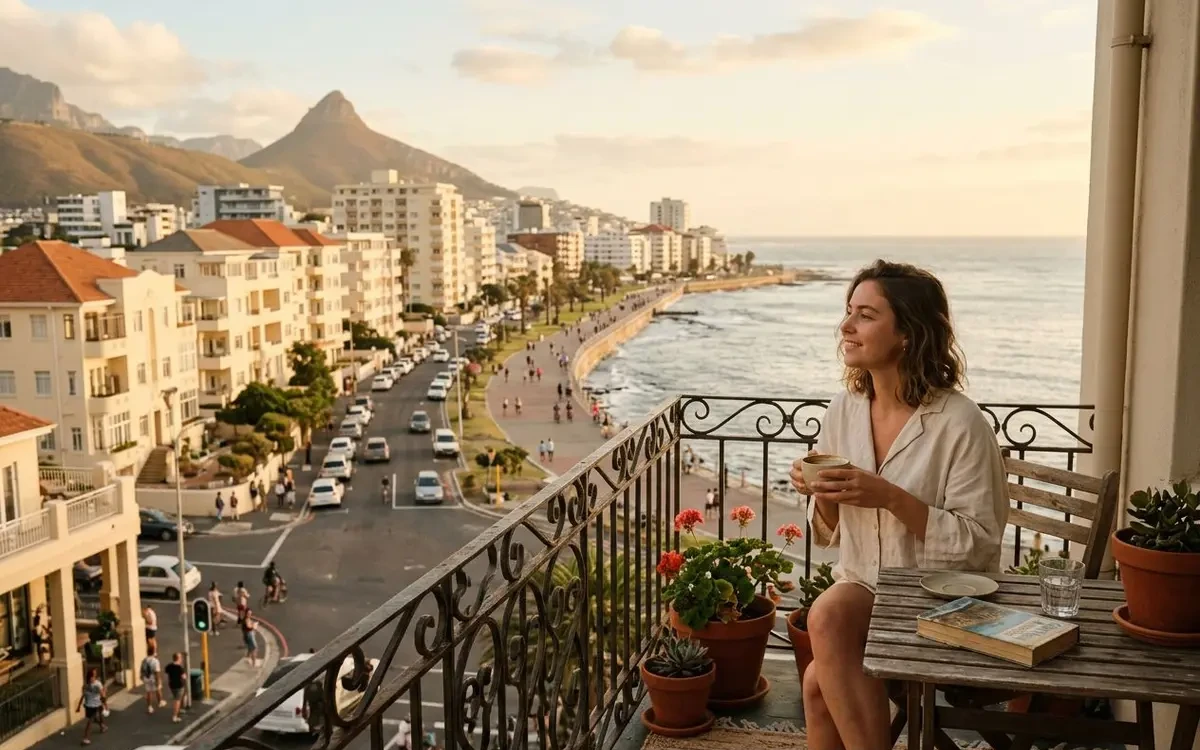
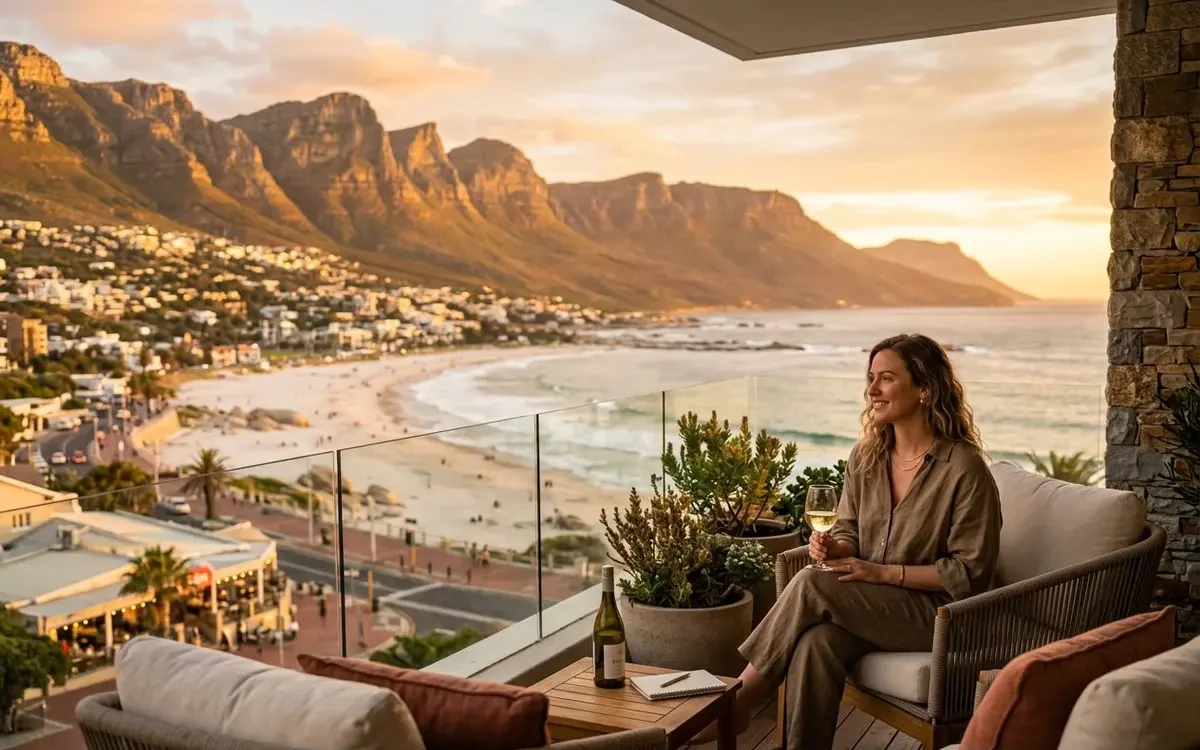
Camps Bay is the suburb that visitors picture when they imagine Cape Town at its most spectacular. The Twelve Apostles mountain range frames the back of a white-sand beach, the Atlantic stretches west, and a strip of sun-drenched restaurants lines Victoria Road. It is also one of the most expensive and logistically awkward places to base yourself in the city. Both things are true, and both matter before you book.
The Experience
Waking up in Camps Bay means panoramic Atlantic views from almost anywhere you stay, a walkable beach that rivals anything in the Mediterranean, and a concentration of restaurants and bars within five minutes on foot. The light here in the late afternoon, when the sun drops behind the Twelve Apostles and turns the water gold, is the kind of thing people cross continents for. It is genuinely one of the most photogenic places to stay anywhere on the continent, and that is not an overstatement.
The beach itself is long, clean, and genuinely beautiful. It is busy in summer but rarely feels unpleasant. The strip of restaurants on Victoria Road — Codfather, Café Caprice, various newer spots — means you do not need to travel far for food or sundowners.
The Trade-offs
None of this comes cheaply or without inconvenience. Mid-range hotels in Camps Bay run R2,500–R8,000 per night, and anything with a genuine sea view will sit toward the top of that range. Self-catering apartments bring the price down, but even those carry a Camps Bay premium.
The South-Easter wind — Cape Town's famous summer wind — hits this stretch of coastline particularly hard between October and March. On a bad South-Easter day, the beach is effectively unusable and outdoor dining is miserable. This is not a fringe occurrence; it happens regularly throughout the summer season.
Parking is a persistent frustration. The suburb is designed around a single road and a beach, and in peak season finding a space takes time and patience. Driving into town and back adds to any journey. Camps Bay is also geographically isolated from the rest of Cape Town — it sits on the far side of Signal Hill from the City Bowl, which means even a short trip to the V&A Waterfront or De Waterkant takes twenty minutes by car. The suburb itself has limited neighbourhood depth: it is essentially a strip, not an area to wander.
Where to Stay
The Bay Hotel is the most reliable full-service beachfront option. It is directly on the beach road, has a good pool, and the service standard is consistent. It does not pretend to be intimate, but for a hotel of its size it performs well.
Twelve Apostles Hotel & Spa sits slightly outside Camps Bay toward Llandudno, which means it is quieter and more removed, but the setting is exceptional — mountain behind, ocean views, and what I consider one of the best hotel pools in Cape Town. It is a genuine five-star property and priced accordingly. If you are going to spend serious money on one night, this is worth considering.
For lower price points, self-catering apartments throughout the suburb offer a way into Camps Bay without the full hotel rate. Quality varies significantly — read recent reviews carefully before booking.
Best For
Camps Bay earns its place for honeymooners and couples who want maximum visual impact and do not mind paying for it. A single splurge night here — particularly at Twelve Apostles — is a reasonable use of a special-occasion budget. It also works well for anyone whose primary agenda is beach and restaurants within walking distance, without needing to explore the city more broadly.
Not Best For
Families with young children will find the beach beautiful but under-equipped — there are no facilities, no lifeguards in the formal sense, and the water is cold even in summer. Anyone on a budget will find Camps Bay frustrating: the price premium applies to everything, including coffee. And if you want to use Cape Town as a base for exploring widely — the Winelands, the Cape Peninsula, the City Bowl — the geographic isolation of Camps Bay means you will spend more time in transit than guests based closer to the centre. For those trips, Sea Point or Green Point give you most of the Atlantic Seaboard feel at a fraction of the cost and with substantially better access.