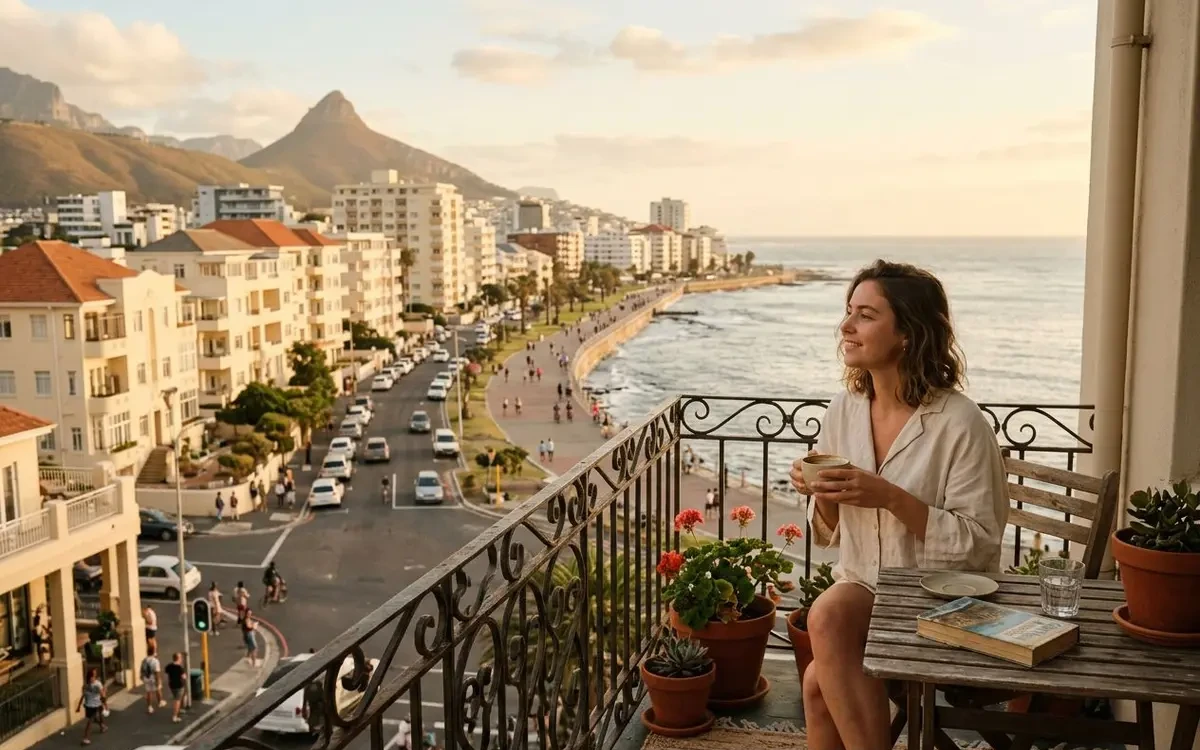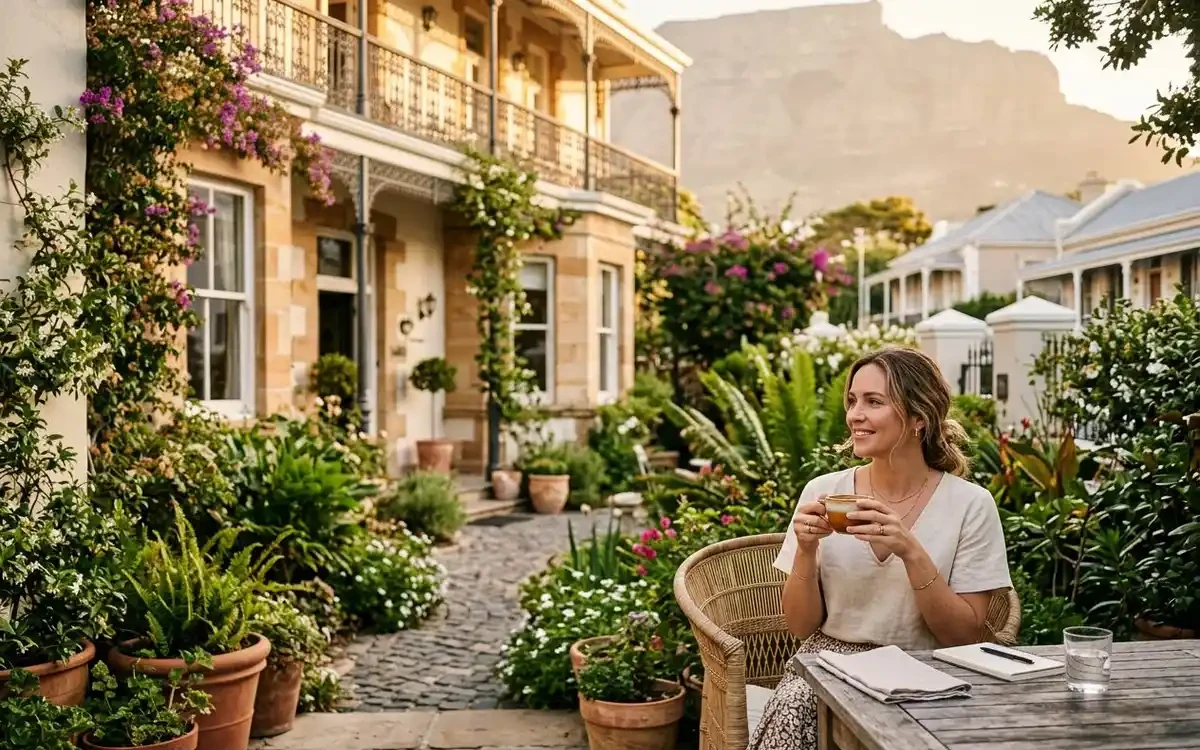
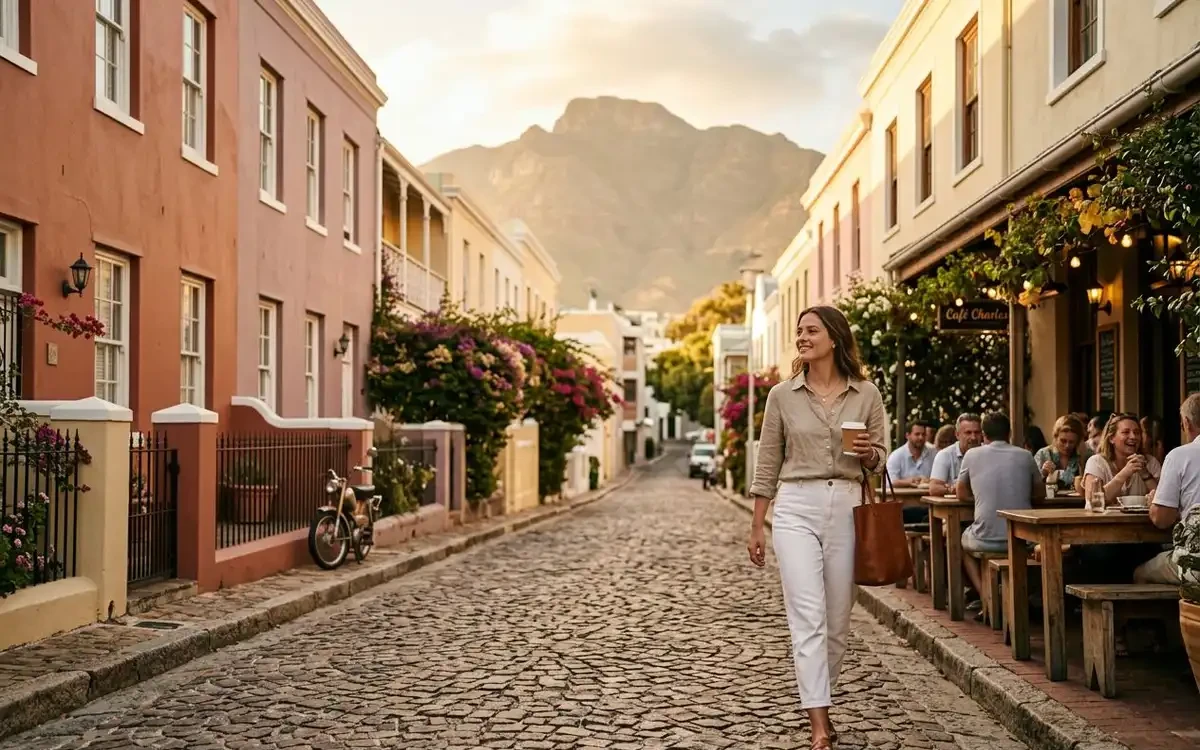
De Waterkant sits at the edge of the City Bowl, wedged between the V&A Waterfront and Green Point, and it is one of the few Cape Town neighbourhoods that genuinely surprises people who haven't walked its streets before. This is not the Cape Town of big beachfront hotels. It is something older, quieter in its way, and considerably more characterful.
The Character of the Neighbourhood
De Waterkant is one of Cape Town's oldest residential areas. The housing stock is largely restored Victorian cottages painted in pastel colours — terracotta, sage, dusty pink — on cobblestone side streets that feel genuinely unlike anywhere else in the city. The scale is human. You walk past someone's front door and they are having breakfast through the open sash window. It is compact enough to feel like a village and well-located enough to feel central.
Practically speaking: the V&A Waterfront is a 15-minute walk, Green Point Park is on your doorstep, and the Cape Quarter shopping centre is three minutes away on foot. It is not isolated. It is just quiet in the way that old residential streets tend to be, even when they sit next to a city.
The Vibe
De Waterkant has long been popular with international visitors and is well-established as one of Cape Town's most welcoming neighbourhoods for the local LGBTQ+ community. The atmosphere is unhurried. You will not find the same density of bars and restaurants as Sea Point, and it lacks the see-and-be-seen energy of the Atlantic Seaboard. What it has instead is texture — coffee shops in converted cottages, small galleries, the sense of a neighbourhood that has been lived in for a long time.
It is more expensive per night than equivalent-quality accommodation elsewhere in Cape Town. You are paying partly for the location and partly for the distinctiveness of the buildings themselves.
Where to Stay
The Waterkant Guest House is the obvious anchor: owner-run, characterful, with a good breakfast included. It books up quickly in peak season (December–January, and the Easter weekend). For self-catering, several Victorian cottages on Fritz Street and Hudson Street are listed on Airbnb — search "De Waterkant cottage" and filter by entire home. The quality varies but the setting is consistent. The Cape Quarter hotel apartments sit adjacent to the shopping centre and offer a more contemporary option if the cottage aesthetic doesn't appeal.
The Trade-offs
Parking is street-only and it fills quickly — this matters if you are hiring a car, which most visitors to Cape Town do. Plan to arrive early or accept that you will circle. There are very few supermarkets within comfortable walking distance: the Pick n Pay on Somerset Road is about ten minutes on foot, which is fine but not convenient. On weekend evenings, the streets near the Cape Quarter become noticeably louder as the bars get going. If you need quiet after 10pm, check whether your accommodation is on one of the quieter cobblestone streets rather than facing the main drag.
Best For — and Who Should Look Elsewhere
De Waterkant works well for couples, for short stays of two to four nights, and for people who want Waterfront proximity without the scale and formality of a large Waterfront hotel. The walking distance to the V&A is genuinely useful if you plan to spend time there — it makes coming and going easy without needing a car every time.
It is less well-suited to families who need space, to anyone who requires reliable parking, and to visitors who plan to self-cater and want a supermarket close by. For those priorities, Sea Point or the Southern Suburbs will serve you better.