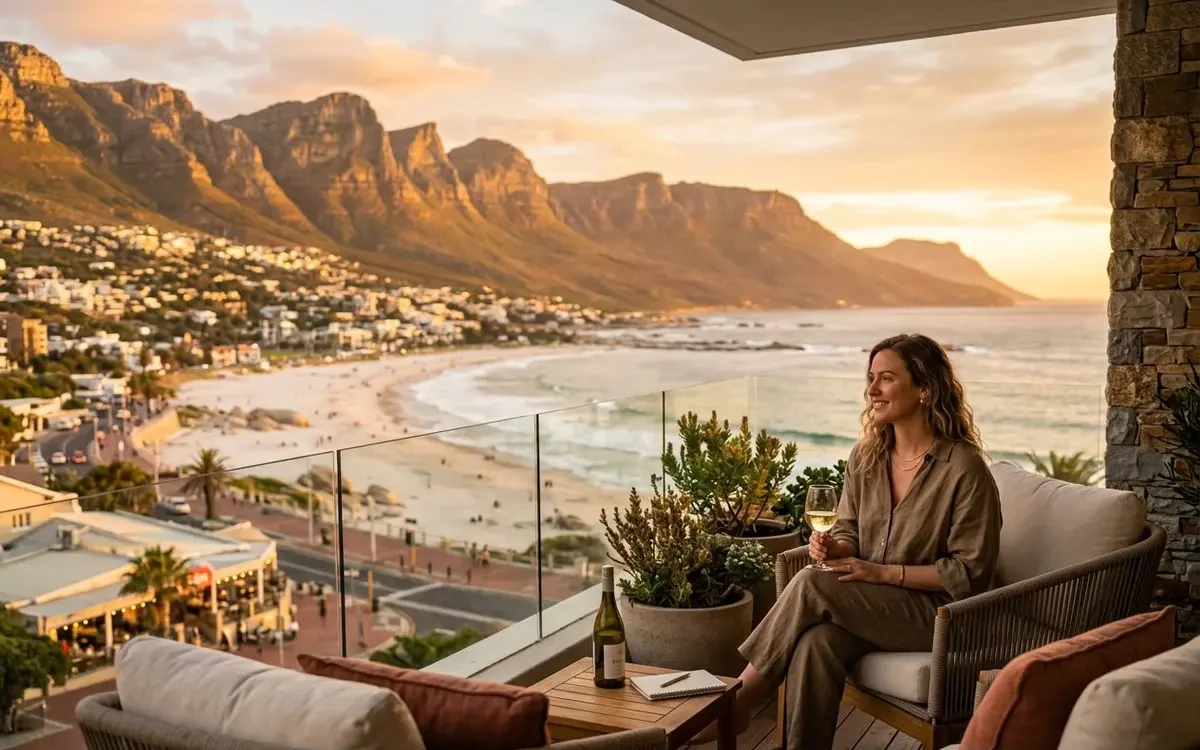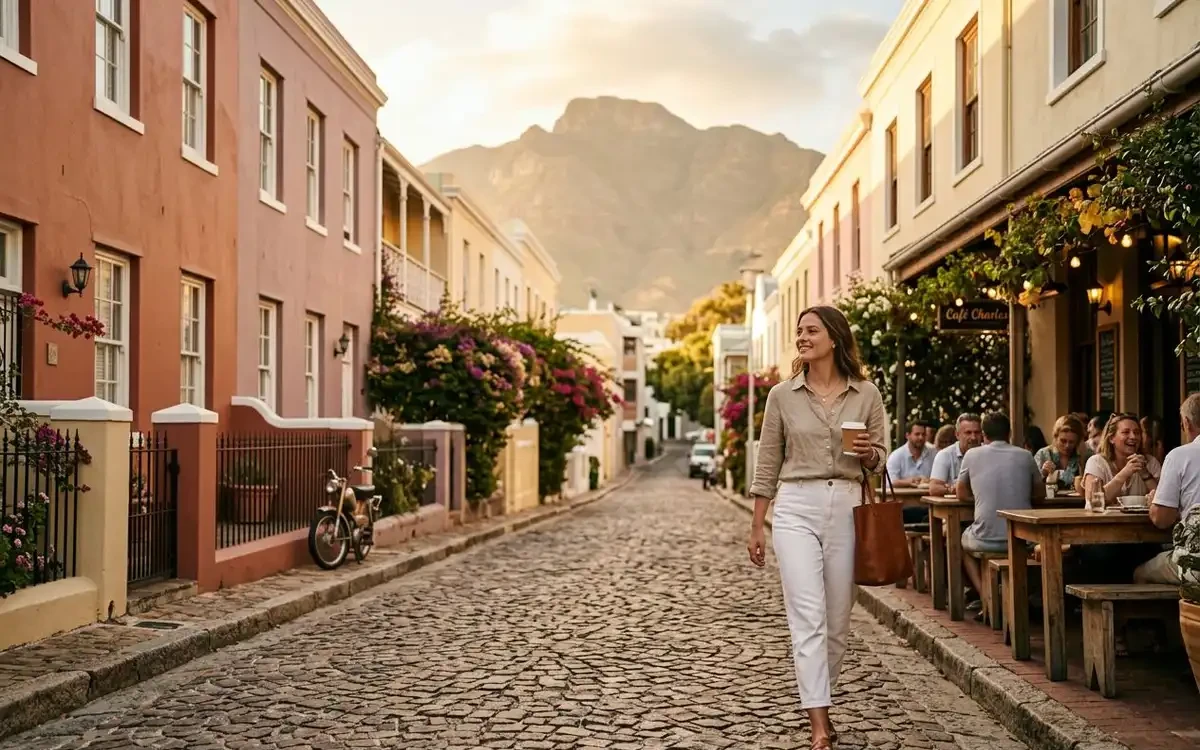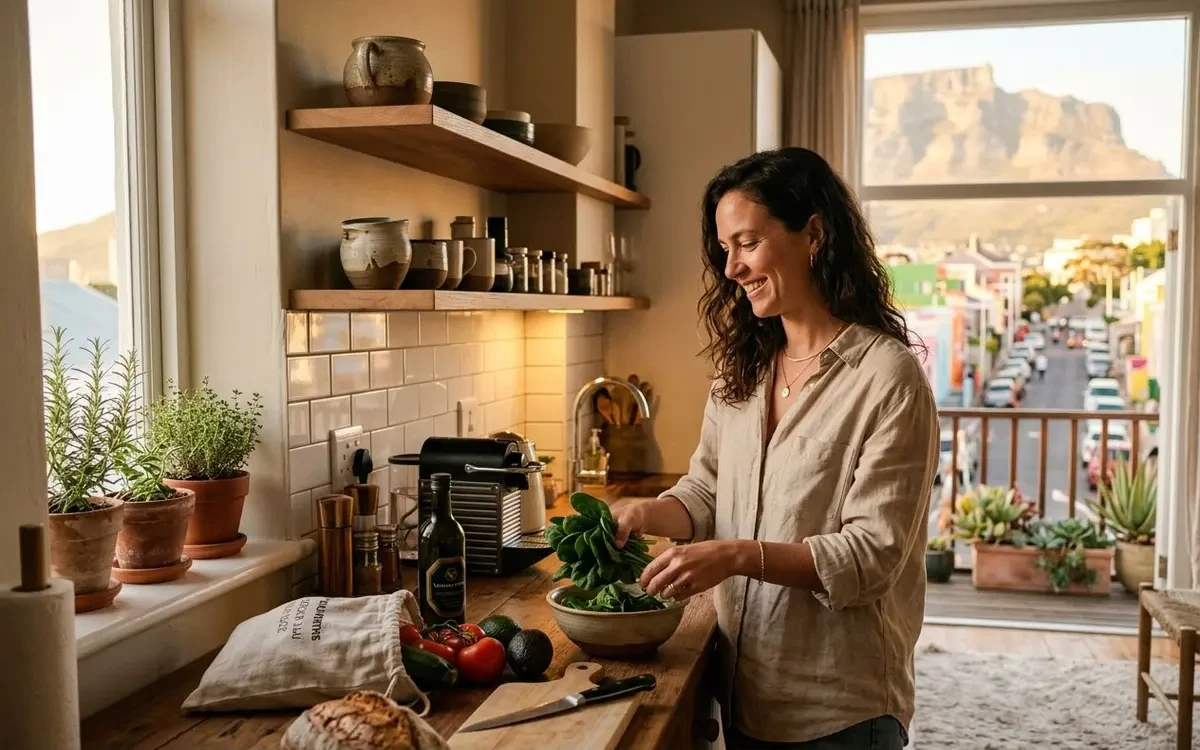
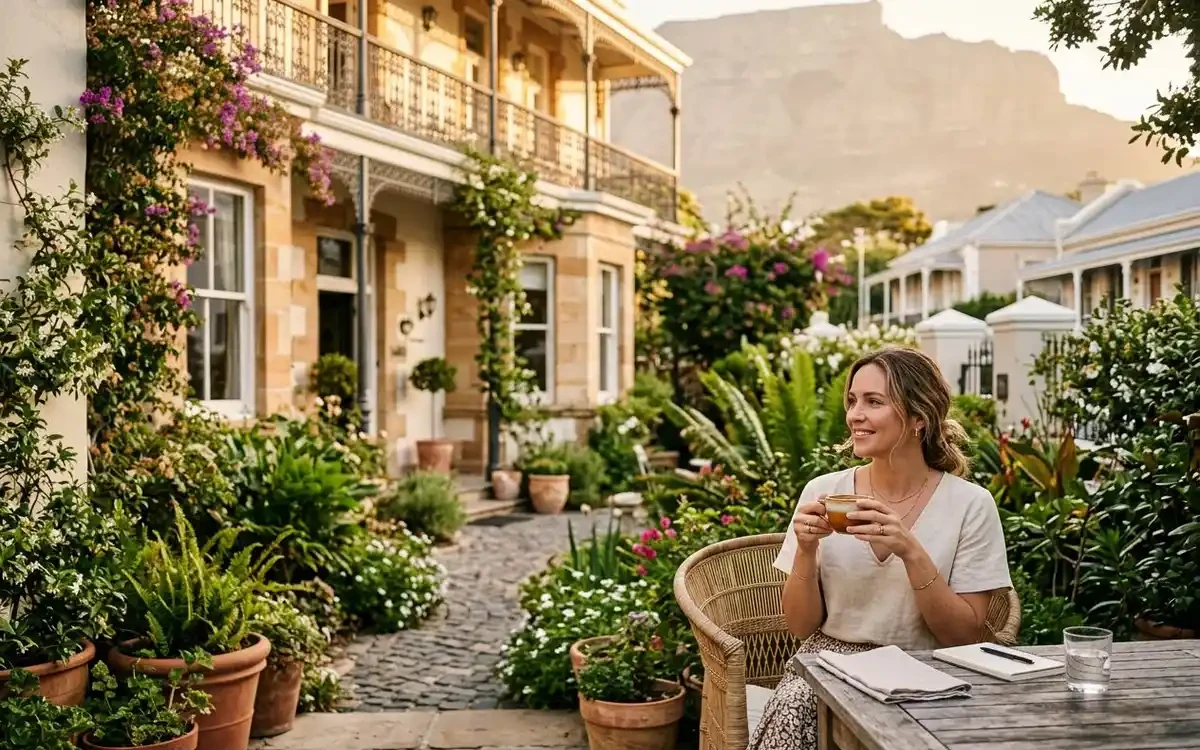
Cape Town has more than its share of large hotels — international chains, business properties, and sprawling resorts that could be in any city in the world. The boutique guesthouses are different. They sit inside Victorian terraces in the City Bowl, on the slopes of Signal Hill, in quiet Green Point streets that most visitors never find. They have owners who know which restaurant just opened on Kloof Street and which beach walk is worth the early start. That local knowledge, combined with a breakfast that someone actually cooked that morning, is something no hotel with 300 rooms can replicate.
Why Boutique Works in Cape Town
The city's architectural range is one reason boutique accommodation thrives here. Cape Dutch manor houses, Victorian terraces, Art Deco apartment buildings, and modernist hillside homes all create naturally beautiful spaces that convert well into intimate guesthouses. The bones are already interesting before anyone puts a bed in them.
Owner-run properties also tend to attract people who genuinely know and love the city. The recommendation you get over breakfast about a wine farm in Franschhoek or a lesser-known hike on the Peninsula is worth more than any printed map. And because the breakfast is typically made fresh rather than set out from trays, the mornings are noticeably better than anything offered by a large-chain property at the same price point.
Kensington Place, Higgovale
Eight suites, a mountain-facing pool, and a breakfast that has been described to me by more than one guest as the best they have had in Cape Town. Kensington Place sits in Higgovale — the quiet residential pocket just above the City Bowl — and it is walking distance to Kloof Street, which means everything from coffee to dinner is within fifteen minutes on foot.
The service standard here is exceptional for a property this size. It does not feel like a hotel trying to be a guesthouse; it feels like a carefully considered small hotel that has been run by people who care about it for a long time. Rates run R3,500–R6,000 per night depending on suite and season. It is not the cheapest option on this list, but for the quality it represents genuinely strong value — and in a broader context, it is one of the finest small hotels in the country.
Mannabay, Signal Hill
Eleven rooms in an Art Deco building on the slopes of Signal Hill, with views over the City Bowl and the Atlantic that are among the best from any guesthouse in Cape Town. The architecture gives Mannabay genuine character — this is not a converted suburban home but a building with history and visual presence.
A heated pool, attentive service, and a location that rewards guests who are happy to drive rather than walk. Mannabay is not in walking distance of much — Signal Hill is a residential area and the nearest restaurant clusters are a short drive away — but the views from the property itself are a reasonable compensation. If you are the kind of traveller who wants to sit on a terrace and look out over one of the great cities in the world, this delivers that without reservation.
POD Boutique Hotel, Green Point
Contemporary design, well-executed and unpretentious, in a Green Point location that puts you within walking distance of the V&A Waterfront and the Green Point promenade. POD is the most accessible entry point on this list: rates run R2,000–R3,500 per night, the breakfast is good, and the service does not try to be anything other than what it is.
For guests who want the boutique feel — individual rooms, real design decisions, genuine character — without the price premium of Kensington Place or the relative remoteness of Mannabay, POD is the correct choice. It sits in a part of the city that is easy to navigate, well-connected to the Waterfront, and has enough restaurants and cafes nearby to make it a functional base for a longer stay.
How to Find Others
The properties above are the ones I can recommend from direct knowledge or repeated reliable referrals. Beyond them, the Heritage Boutique Hotels SA registry lists independently verified small properties across South Africa, and it is a better starting point than general booking platforms because the verification process filters out properties that use the word "boutique" loosely.
When reading TripAdvisor or Google reviews, filter for properties under twenty rooms and look specifically for recent mentions of the owner or manager by name — that is usually a reliable signal that the place is still genuinely owner-run rather than having drifted into management-company hands. A property that has been sold to an investor and handed to a property management company will often retain boutique pricing while losing everything that made it worth the boutique premium.