
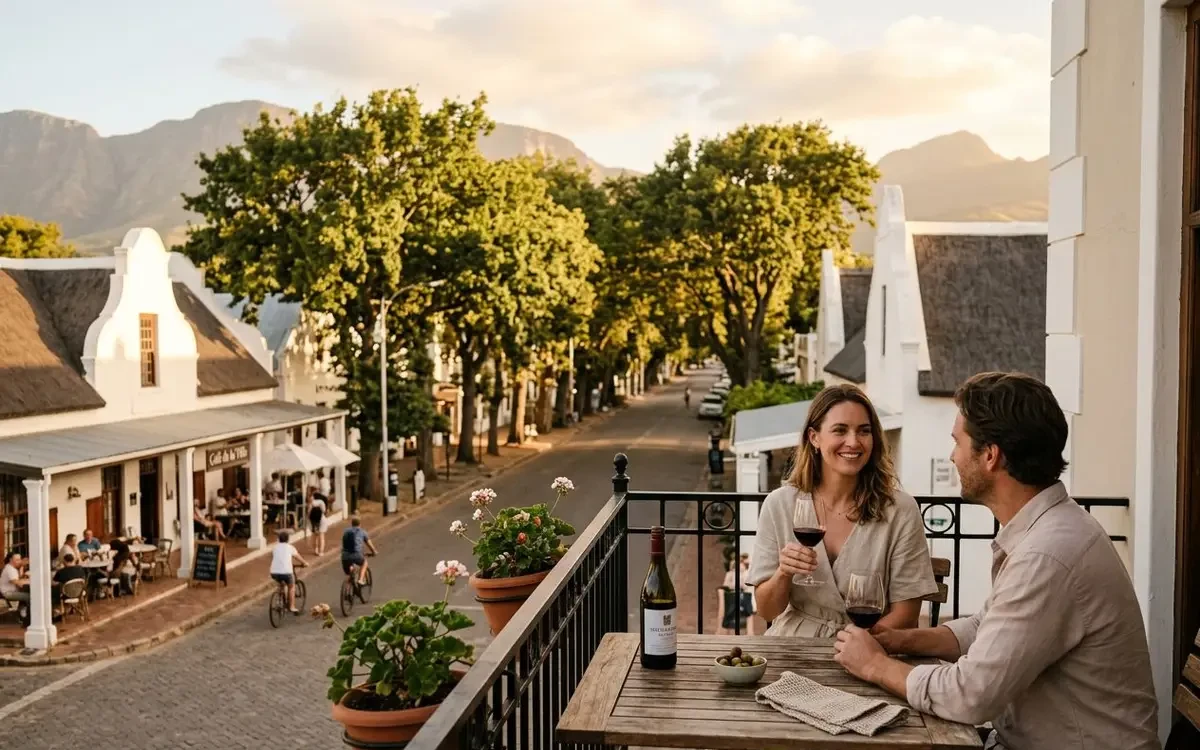
Stellenbosch sits 45 minutes east of Cape Town on the N2, in a valley flanked by the Helderberg and Stellenbosch mountains. It is one of South Africa's oldest towns — Cape Dutch architecture, oak-lined streets, a functioning university, and more wine farms within a 20-minute radius than you could reasonably visit in a week. Most visitors go for the day. The question is whether that is actually enough.
What a Day Trip Gets You
A well-planned day trip covers the essentials comfortably. Church Street and the Braak are pleasant on foot, and the core of the town takes an hour to walk without rushing. A lunch on Dorp Street — the main restaurant strip — is worth it for the setting alone, with oak trees overhead and Cape Dutch facades behind you. Two wine farm visits fit easily into an afternoon: Jordaan's, Rust en Vrede, and Waterford are all within 20 minutes of the town centre and do tastings without requiring a reservation on weekdays. Waterford in particular is worth the visit for both the wines and the estate itself.
If you are time-constrained, this is genuinely enjoyable and covers the highlights. You will not feel you have wasted the trip.
What You Miss on a Day Trip
The evening light in the vineyards is difficult to describe to someone who hasn't seen it. In summer, from about 5pm onwards, the light goes golden and the mountains behind the farms take on a quality that photographers chase specifically. You miss all of it if you leave at 4pm to beat Cape Town traffic.
You also miss the wine farm restaurant dinners that make an overnight stay genuinely worthwhile. Terroir at Kleine Zalze and The Restaurant at Waterkloof are both destination-level — the kind of dinner you plan a trip around rather than treating as a side activity. Both require advance bookings and neither makes sense if you need to drive back to Cape Town afterwards. And finally, there is the morning: a walk along the Eerste River when the mist is still on the Helderberg mountains is the sort of thing that turns a functional trip into a memory.
Where to Stay Overnight
Kleine Zalze Wine Estate is the strongest all-round choice for an overnight stay — on-site lodge accommodation, exceptional value given the breakfast and surroundings, and you can walk to Terroir for dinner without needing a car. Book well ahead in season.
Lanzerac Hotel is the historic Cape Dutch estate option: more formal, beautifully maintained, with an excellent pool. It suits people who want a proper hotel experience rather than the wine farm lodge feel. Slightly higher price point, commensurately polished.
Self-catering cottages on wine farms are the third category — search "Wine Estate Cottage Stellenbosch" and several options appear in the R1,000–R2,500 per night range. These work particularly well for two couples travelling together, where the space and the cooking facilities make the economics sensible.
The Honest Answer
If you are spending more than four days in Cape Town, an overnight in Stellenbosch is worth doing — specifically for the evening light and the ability to do a proper wine dinner without driving back. The experience of staying in or near the vineyards, rather than visiting them briefly, changes the quality of the trip in a way that is hard to replicate on a day visit.
If you have three days or fewer in Cape Town, the day trip is the right call. Stellenbosch is genuinely excellent for a day; you will not leave disappointed. But if you have the time, stay. The morning after is the best part.
Practical Notes
Stellenbosch is 45 minutes by car via the N2, with traffic light except on Friday evenings when the Cape Town outbound traffic stacks badly — if you are leaving on a Friday, go before 3pm or after 7pm. There is no direct public transport from Cape Town city centre that is practical for tourists. An Uber from Cape Town costs R200–R300 each way, which is workable for a day trip but adds up quickly if you are also Ubering between farms.
Designated driver culture is strong among wine farm regulars, and Uber between farms is normal and expected — you will not be the only person at a tasting who has arrived without a car. The farms themselves are accustomed to it. Plan for this if you want to do more than one or two tastings seriously; driving between wine farms after three tastings is not the plan you want to be improvising.